
When travelers think about Mumbai, they often imagine Bollywood, Marine Drive, bustling markets, and the city’s unstoppable energy. But before experiencing the magic of Mumbai, millions of passengers begin their journey at Chhatrapati Shivaji Maharaj International Airport — one of India’s busiest and most iconic aviation hubs.
Known by its airport code BOM, this airport is far more than just a transit point. It is a symbol of modern India, combining cutting-edge infrastructure, world-class passenger experience, art, culture, and engineering brilliance under one roof.
A Brief History of Mumbai Airport
Originally known as Sahar International Airport, the airport was later renamed after the legendary Maratha ruler Chhatrapati Shivaji Maharaj. Over the decades, it evolved from a regional aviation center into one of the busiest airports in Asia. Today, it serves as a major hub for domestic and international airlines connecting India to the world.
The airport plays a crucial role in supporting Mumbai’s status as India’s financial capital, handling tens of millions of passengers annually. Recent reports noted passenger traffic exceeding 52 million travelers in a single financial year.
Terminal 2 – A Masterpiece of Architecture
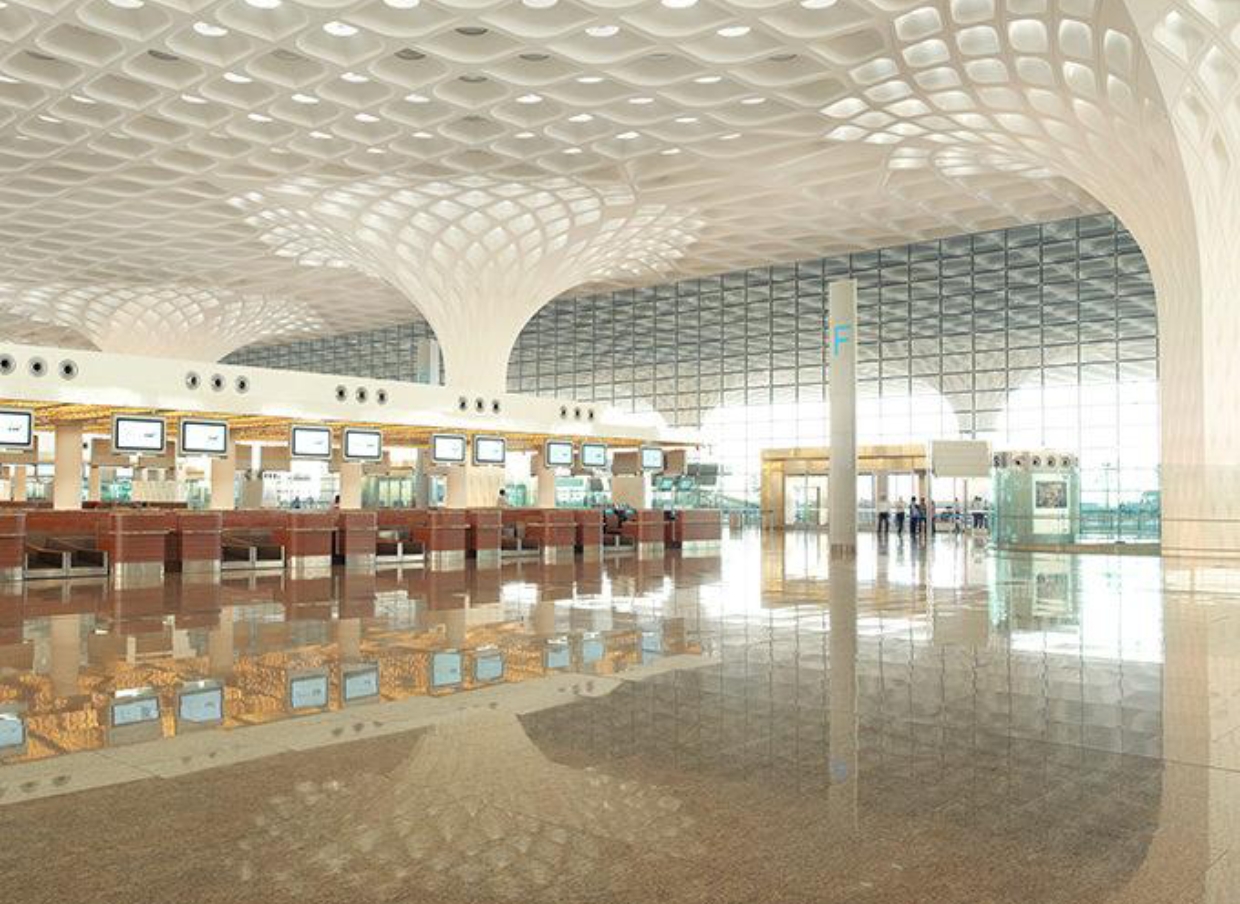
The crown jewel of the airport is undoubtedly Terminal 2 (T2). Designed by the globally renowned architectural firm SOM (Skidmore, Owings & Merrill), T2 is often considered one of the most beautiful airport terminals in the world.
Spread across approximately 4.4 million square feet, the terminal was designed to handle nearly 40 million passengers annually. Its iconic X-shaped structure maximizes operational efficiency while creating a visually stunning passenger experience.
The terminal’s design draws inspiration from traditional Indian pavilions and peacock feathers, blending Indian heritage with futuristic architecture. The ceiling patterns, massive columns, and ambient lighting create an atmosphere more like a luxury cultural center than a conventional airport.
The Jaya He Museum – Art Inside an Airport
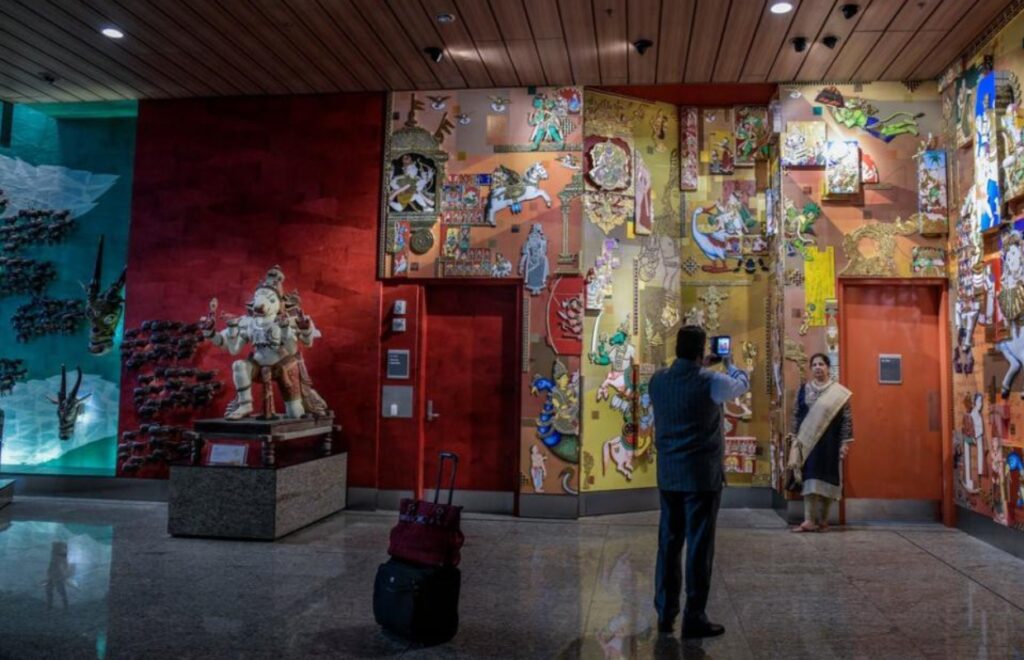
One of the most unique aspects of Mumbai Airport is the famous “Jaya He” Museum, an integrated art program inside Terminal 2.
Travelers walking through the terminal encounter giant installations, sculptures, paintings, tribal artwork, and contemporary Indian art pieces that showcase India’s cultural diversity. The airport effectively doubles as a public art museum, making layovers surprisingly memorable.
This artistic integration has helped the airport stand apart globally, offering passengers a distinctly Indian experience from the moment they land.
Domestic and International Connectivity
The airport operates through two main passenger terminals:
Terminal 1 (T1) – Primarily domestic operations
Terminal 2 (T2) – International and selected domestic operations
Both terminals are located in different areas of the airport complex and are connected via shuttle services.
Mumbai Airport serves as a major hub for airlines connecting Europe, the Middle East, Southeast Asia, and North America. Because of Mumbai’s geographic position, it acts as a strategic gateway between East and West.
Passenger Experience at Mumbai Airport
Frequent travelers often praise the airport for:
~ Spacious interiors
~ Efficient immigration systems
~ Premium lounges
~ Wide retail and dining options
~ Beautiful ambiance
~ Smooth international transit experience
Recent infrastructure improvements, including metro connectivity to Terminal 2, have further enhanced accessibility for passengers.
At the same time, like any major global airport, peak-hour congestion and traffic around the airport remain common concerns among travelers. Discussions on travel forums and local communities frequently mention the importance of reaching early during busy hours or festivals.
Engineering and Operational Excellence
Behind the glamour lies an extraordinary engineering achievement.
The terminal incorporates:
~ Multi-level passenger movement systems
~ Advanced baggage handling
~ Multiple aircraft ramp systems (MARS)
~ Smart parking infrastructure
~ High-capacity boarding gates
~ Energy-efficient operational systems
The airport handles hundreds of aircraft movements daily, making it one of the most operationally intense aviation hubs in India.
Future of Mumbai Aviation
With Mumbai’s growing aviation demand, the city recently expanded its airport ecosystem through the development of the new Navi Mumbai International Airport. This new airport is expected to reduce congestion and support future passenger growth across the Mumbai Metropolitan Region.
Even with this expansion, Chhatrapati Shivaji Maharaj International Airport will remain one of India’s most important aviation gateways for years to come.
Chhatrapati Shivaji Maharaj International Airport is not just an airport — it is Mumbai’s first impression to the world.
From its award-winning architecture and cultural storytelling to its operational complexity and global connectivity, the airport represents the ambition of modern India. Whether you are a frequent flyer, aviation enthusiast, or first-time visitor to Mumbai, the experience of walking through Terminal 2 leaves a lasting memory.
For travelers exploring India’s aviation landscape, Mumbai Airport is truly an experience in itself.
Comment your memories of Mumbai Airport !!
Next: Read our guide on Delhi T3 airport or about Jewar Airport – Airport & Me.
For more airport guides and travel tips, stay tuned to www.airportandme.com !